RACC Blog

Hiring: Director of Finance & EA Positions

RACC is looking to fill two positions!

The Director of Finance and Administration is a hands-on leader to be responsible for the day-to-day financial and administrative operations of the organization. This position oversees all monthly accounting functions, payroll and benefits administration, vendor management, and operational processes while helping to strengthen internal systems and organizational effectiveness.

The ideal candidate is both strategic and highly detail-oriented — someone who can lead processes, improve systems, and partner with leadership, while also rolling up their sleeves to complete day-to-day work accurately and efficiently.

Learn more here


The Executive Assistant is a highly organized and proactive team member who supports the organization’s daily administrative and operational functions. This role combines traditional executive administrative support responsibilities with operational coordination and systems management to help ensure the organization runs smoothly and efficiently.

The ideal candidate is detail-oriented, resourceful, and service-minded, with strong communication and organizational skills. This position requires someone who can manage multiple priorities, anticipate needs, improve processes, and provide dependable support across teams.

Learn more here


Both roles are a full-time hybrid roles in Portland, Oregon.


Join Our Team! RACC is Hiring an Executive Assistant

Operations – Portland, Oregon (Hybrid)

Regional Arts & Culture Council values a community in which everyone can participate in arts and culture and strives to cultivate equity in all of its programs. We value a diverse workforce, built upon inclusion, equity and cultural humility and are proud to be an equal opportunity workplace. RACC programs support artists and arts organizations, promote RACC’s core values, and advance the community’s access to a wide range of arts and culture experiences.

The Executive Assistant is a highly organized and proactive team member who supports the organization’s daily administrative and operational functions. This role combines traditional executive administrative support responsibilities with operational coordination and systems management to help ensure the organization runs smoothly and efficiently.

The ideal candidate is detail-oriented, resourceful, and service-minded, with strong communication and organizational skills. This position requires someone who can manage multiple priorities, anticipate needs, improve processes, and provide dependable support across teams.

Apply Here

Essential Functions and Responsibilities

Administrative Support

  • Provide general administrative support to leadership and staff
  • Serve as primary administrative support to the Executive Director
  • Manage the Executive Director’s calendar, scheduling, and meeting coordination
  • Coordinate Executive Director travel arrangements, itineraries, and expense documentation
  • Support preparation for leadership meetings, presentations, and external engagements
  • Draft, format, and proofread correspondence, reports, agendas, and other materials for the Executive Director
  • Manage confidential and sensitive information with professionalism and discretion
  • Coordinate board and committee meeting logistics, scheduling, and materials in partnership with leadership
  • Track key deadlines, follow-up items, and organizational priorities for the Executive Director
  • Support communication and coordination between the Executive Director and staff, board members, partners, and external stakeholders
  • Provide administrative support to program team, as needed
  • Prepare and maintain organizational documents, files, and records
  • Monitor shared email inboxes and respond to inquiries as appropriate
  • Assist with internal communications and organizational coordination efforts

Operations Coordination

  • Support day-to-day office operations and organizational workflows
  • Coordinate vendor communications, office supplies, and facility needs
  • Help maintain operational systems, templates, and procedures
  • Track organizational deadlines, renewals, and recurring administrative tasks
  • Assist with onboarding logistics for new employees and contractors
  • Coordinate technology setup and office equipment needs with vendors or IT support
  • Support internal process improvement and cross-team coordination efforts

Financial & Administrative Support

  • Assist with invoice collection, payment tracking, and expense documentation
  • Support vendor setup and administrative recordkeeping
  • Help organize payroll and benefits documentation as needed
  • Support recruiting process through administrative processes management and onboarding/offboarding coordination
  • Maintain accurate administrative and operational records
  • Assist with data entry and reporting tasks across departments

Organizational Support & Communication

  • Serve as a helpful point of contact for staff, vendors, and external partners
  • Support organizational events, trainings, and staff meetings
  • Help maintain a positive, organized, and collaborative work environment
  • Contribute to continuous improvement of organizational systems and processes

Required Knowledge, Skills and Abilities

  • 4+ years of administrative, operations, office management, or coordination experience
  • Strong organizational and time management skills
  • Experience coordinating meetings, events, or organizational operations
  • Excellent written and verbal communication skills
  • Ability to manage multiple priorities and follow through independently
  • Strong attention to detail and problem-solving skills
  • Proficiency with Microsoft Office, Google Workspace, and virtual meeting tools
  • Ability to handle confidential information professionally

Preferred Knowledge, Skills and Abilities

  • Nonprofit experience
  • Experience with project management or workflow tools (i.e. Asana)
  • Familiarity with financial or HR administrative processes

Join Our Team! RACC is Hiring a Director of Finance & Administration

Operations – Portland, Oregon (Hybrid)

Regional Arts & Culture Council values a community in which everyone can participate in arts and culture and strives to cultivate equity in all of its programs. We value a diverse workforce, built upon inclusion, equity and cultural humility and are proud to be an equal opportunity workplace. RACC programs support artists and arts organizations, promote RACC’s core values, and advance the community’s access to a wide range of arts and culture experiences.

Apply here

Director of Finance & Administration Role Summary

The Director of Finance and Administration is a hands-on leader responsible for the day-to-day financial and administrative operations of the organization. This position oversees all monthly accounting functions, payroll and benefits administration, vendor management, and operational processes while helping to strengthen internal systems and organizational effectiveness.

The ideal candidate is both strategic and highly detail-oriented — someone who can lead processes, improve systems, and partner with leadership, while also rolling up their sleeves to complete day-to-day work accurately and efficiently.

Essential Functions and Responsibilities

Finance & Accounting

  • Lead all monthly accounting operations, including:
    • Accounts payable and receivable
    • General ledger maintenance
    • Journal entries and reconciliations
    • Credit card and bank reconciliations
    • Month-end and year-end close
  • Maintain accounting systems and financial records in accordance with nonprofit accounting standards
  • Lead the annual audit preparation and coordination with external auditors
  • Support organizational budgeting, cash flow tracking, and financial forecasting
  • Create and implement a robust grants & contracts management process; oversee grant budgeting, reporting, and compliance; coordinate with funders and internal teams to ensure that funds are tracked and spent in accordance with contractual obligations.
  • Monitor grant and restricted fund activity to ensure accurate tracking and reporting
  • Ensure compliance with internal controls and financial policies

Payroll & Benefits Administration

  • Oversee payroll processing and ensure timely, accurate payroll execution
  • Oversee employee benefits administration, including enrollments, changes, and annual renewals
  • Serve as liaison with payroll providers and benefits brokers
  • Maintain payroll and employee records in compliance with applicable laws and regulations
  • Support onboarding and offboarding administrative processes
  • Oversee annual reporting, including W-2s, 1099s, and related filings

Vendor & Administrative Management

  • Manage vendor relationships, contracts, and payment processes
  • Maintain operational systems and administrative workflows
  • Coordinate office operations and administrative procedures as needed
  • Support organizational insurance renewals and compliance documentation
  • Identify opportunities to improve systems, processes, and operational efficiency

Leadership & Cross Functional Support

  • Supervise accounting & administrative support staff, including outsourced accounting team, providing coaching, 1:1 support, and overseeing deliverables.
  • Serve as a trusted operational resource to leadership and staff
  • Develop and improve internal procedures and documentation
  • Help establish accountability and consistency across administrative processes
  • Support a collaborative, service-oriented organizational culture

Required Knowledge, Skills and Abilities

  • Bachelor’s degree in Accounting, Finance, Business Administration, or related field, or equivalent professional experience
  • 5+ years of progressive accounting and operations experience
  • Strong understanding of nonprofit accounting principles
  • Experience processing payroll and administering employee benefits
  • Demonstrated ability to manage multiple priorities and deadlines independently
  • Strong organizational, analytical, and problem-solving skills
  • High level of accuracy, discretion, and professionalism
  • Excellent communication and interpersonal skills
  • Proficiency with accounting software and Microsoft Excel/Google Sheets

Preferred Knowledge, Skills and Abilities

  • Experience with grants or restricted funding
  • Experience with Sage Intacct, Bill.com or similar systems

RFQ: Harrison Community Village Artist-in-Residence


In partnership with Multnomah County and Do Good Multnomah, the Regional Arts & Culture Council (RACC) invites artists/artist teams who are currently living in Oregon or Washington and producing work in visual, literary, media, social practice and/or interdisciplinary mediums to submit qualifications for up to a one year artist-in-residence opportunity at the newly constructed Harrison Community Village in Southeast Portland. One artist/artist team will be selected to work with and among village residents and staff to create work in any medium that engages and/or is a result of collaborating with the community. A combination of temporary, itinerant, time-based and permanent artistic manifestations are welcomed, encouraged and to be determined through the course of the residency. Located on the southeast corner of SE Mill St and SE 82nd Ave, the new village is nestled between the Tabor, Montavilla and Mill Park neighborhoods in Portland, OR. The budget available for the project comes from Multnomah County’s Percent for Art Program and is an all inclusive budget of $15,000-$25,000. Submissions are due by Wednesday, June 10, 2026 at 11:59pm PDT. Further information about the project can be accessed here. If you would prefer these materials in another language please contact the RACC project team for translation services.


Important Dates

  • May 13, 2026 – RFQ launch
  • May 15, 18, 26 + June 1, 8, 2026 – Sophie’s Office Hours, more information here
  • June 10, 2026 11:59pm Pacific Daylight Time  – Applications due
  • June/July 2026 – Panel review and artist selection including interviews
  • August 2026 – Onboarding and Project Design
  • August 2026-August 2027 – Community Engagement and Artist-in-Residence

Art Opportunity

We are seeking an artist/artist team who can engage with residents and embed themselves into village life over the course of the residency in order to provide opportunities for artistic expression and creative outlet for those who will call the village home. Several locations within the village site have been identified as potential opportunities for temporary, permanent and/or rotating art such as panels of the inward facing fencing and community kitchen area. However, we expect these final opportunities to be decided upon in collaboration with the selected artist(s), village residents, staff and RACC as a result of what is shared, learned and prioritized over the course of the residency. Multnomah County, Do Good Multnomah, RACC and other project team members are open-minded about how the tangible results of the residency may manifest and are consciously trying not to be prescriptive. Therefore applications from artists’ working in a wide-range of mediums are encouraged. However, artists’ with lived experience will be prioritized.

The goals are being driven by shared values across the project partners and the experience for residents is just as, if not more, important than any tangible outcome.

Information Sessions for Artists

The information in this RFQ is also described in a recorded video which can be accessed here. Please click the link and use passcode b*8S6@1= to access the recording.

Additionally, given the sensitivity and nuance of this project, we understand that some applicants may wish to ask questions in a confidential setting. Therefore, if that is of interest, you may schedule a brief one-on-one meeting with project manager, Sophie, via Calendly here.

We strongly encourage you to review the recorded info session, especially if you are a first-time applicant as more information about this opportunity is shared and there are details on how to submit application materials.

If you have questions about the info session, the opportunity or need any accommodations in order to access these resources, please email project manager, Sophie, at shook@racc.org.

About Harrison Community Village

The Homeless Services Department (HSD) at Multnomah County, previously known as the Joint Office of Homeless Services (JOHS), is converting the property at 1818 SE 82nd Avenue into an alternative shelter site. This work has been done in collaboration with the Multnomah County Facilities and Property Management (FPM) team and Sosyal Architecture & Community Development with significant input from neighborhood residents, local businesses, community organizations and other key stakeholders.

In December of 2022, as part of the Community Sheltering Strategy/Homelessness Response Action Plan, Multnomah County acquired the future Harrison Community Village site. As a former recreational vehicle dealership, the original building needed to be demolished in order to allow for more intentional and flexible architectural design which is responsive to the residential and programmatic needs of the site. Harrison Community Village, and other similar offerings, expand the County’s capacity to provide safety off the streets for more individuals experiencing homelessness.

One of the aspirational goals of these types of facilities is to provide an environment of safety and support which allows residents to successfully engage in wrap-around services that facilitate their transition to permanent housing. Feedback from those with lived experience has informed the use of modular units for individual use, having a secure space after living unsheltered can assist in people’s experience of safety, stability and ability to engage with services.

The site will include 38 sleeping pods, including 8 that are designed for people living with disabilities. In total, the village will be able to accommodate up to 38 adults (18+). There will be six additional units which will provide office space for staff and participant services, bathrooms and showers, kitchenette amenities, laundry facilities, on-site trash services and storage, all of which will be ADA accessible. For exterior use, there will be a pet relief area and covered outdoor community space. The entire site will be fenced with privacy inserts on all street sides.

Nonprofit provider, Do Good Multnomah, is the programmatic partner involved in the project who will offer and oversee 24/7 wraparound services for village residents while they transition into permanent housing. Services include temporary emergency shelter, sleeping quarters, basic hygiene, 24/7 staffing, and access to case management and abstinence-based recovery services. The goal is to create a low barrier site with access to case management and abstinence-based recovery services that ensure equitable access and outcomes for adults (18+) of all backgrounds and identities.

The objective is to provide these support programs through person-centered and trauma-informed care principles. To protect participant safety, maintain program integrity and support recovery goals in an abstinence-based recovery program, Harrison Community Village will require all staff, participants and volunteers to remain free from the illegal use of drugs and alcohol while working at or participating in the program. All staff, program participants, and volunteers will be asked to consent to random drug testing as a part of this policy.

Since December 2024, HSD has been engaged in a robust series of community meetings with resourced neighbors in order to build relationships and develop the Good Neighbor Agreement (GNA). This is a written statement of shared commitments and responsibilities in relation to HSD-funded shelters where the signatories make a public and joint commitment to each other to abide by the terms. The GNA sets-up protocols and processes to identify opportunities for cooperation and support as well as address potential problems. HSD has already been engaged with the Montavilla Neighborhood Association, 82nd Ave Business Association, Asian Pacific American Network of Oregon (APANO), African Youth & Community Organization (AYCO), Portland Public Schools, and other key community partners. Presentations and related documents from engagement with the surrounding neighborhood, local businesses and community organizations are available on HSD’s Harrison Community Village project webpage.

Construction began in July 2025 and is estimated to be completed in May 2026 with staff and residents expected to arrive in June 2026.

Community Engagement

Community engagement is a central component of this project. We are seeking an artist/artist team who welcomes and reflects the diverse communities that will be served by Harrison Community Village, reside within the surrounding neighborhoods and/or have historic connection to the area within their process and work. Genuine understanding and demonstration of community engagement practices in existing artistic practice, past work and/or other key areas of experience where skillsets may be transferable, such as teaching, mentorship, community organizing, care work and other non-typical/non-traditional examples of embedding community into process and practice, are highly desirable.

We are seeking an original approach to the artist residency that is accessible to people with lived experience of homelessness, adds enjoyment and fulfillment to the community, honors the area’s history, celebrates the shelter and respects its residents while being mindful of their experiences and potential triggers. To avoid the potential to trigger a negative emotional response in visitors and users of the village, the artworks connected to the village must be designed to be trauma-informed. If needed, RACC can assist with hiring a community engagement liaison who will work with the selected artist/artist team to create a plan for community engagement.

While each person is unique, we often expect people who have experienced houselessness to also have histories and identities which additionally include experiencing and/or witnessing trauma, violence, the use of drugs and/or mental health challenges. Therefore, people with lived experience and those with an understanding of trauma-informed design* are preferred. Multnomah County, Do Good Multnomah and RACC are working closely with the local houseless community, future Harrison Community Village residents, Do Good Multnomah participants, health providers and Tabor, Montavilla and Mill Park neighbors to plan for a trauma-informed space.

While the focus of this residency is centered around the residents of Harrison Community Village, there is potential for wider engagement in the neighborhood with other values-aligned community groups such as PDX Saints Love, Rahab’s Sisters, AYCO, APANO and IRCO. While these collaborations are not a requirement of the opportunity, there is a hope that the selected artist(s), with support from RACC, Multnomah County, Do Good Multnomah and other project partners, may consider what’s more broadly possible.

*Further information and definitions of trauma-informed design can be found in the supplemental materials packet

Budget & Length of Project

The all-inclusive budget for the project is between $15,000 and $25,000. This fee is inclusive of all project expenses including artist fees, design development, fabrication/production, materials, equipment, any installation costs, insurance, documentation, community engagement scope of work including any associated travel or additional expenses for these activities, communication/coordination with the design team, construction team and third-party contractors who may help to fabricate and install any artwork.

The residency will ideally commence in Summer 2026 and be completed by Spring/Summer 2027, the exact schedule is to be determined in collaboration between the selected artist(s), RACC, Multnomah County and Do Good Multnomah. The selected artist(s) will be required to carry general liability insurance for the duration of the project.

Following final selection, the artist(s) will develop a scope of work, proposed outcome(s), project calendar and budget. During this planning phase, there will be opportunities to learn more about the Harrison Community Village project and residents from RACC, Multnomah County, Do Good Multnomah and other project partners.

Eligibility

This opportunity is open to artists/artist teams based in Oregon or Washington. If applying as a team, at least one member must meet the residence eligibility requirement. Those with significant current or past connections, or those with interest and ability to create meaningful connections, to the Montavilla, Tabor, Mill Park and/or other surrounding neighborhoods and/or the greater Southeast Portland area are preferred.

Applicants who have an interest in and/or experience with community engagement processes, including social practice, which inform their approach and art practice are strongly encouraged to apply. Significant consideration will be given to artists who have experience working intergenerationally and with residents from historically marginalized and displaced communities to develop their artwork including communities of color as well as immigrant and refugee communities. Artists who have demonstrable lived experience and alignment with people who experience houselessness, people who use drugs and alcohol, people who have experienced incarceration, people who live with neurodivergence, mental illness and/or identify as MAD will be prioritized. Artists who speak languages other than English are also desirable.

RACC is committed to reflecting the cultural richness of our city by promoting opportunities for emerging and historically underrepresented artists. Artists/artist teams representing communities of color are strongly encouraged to apply. RACC is committed to engaging new communities of artists and expanding the range of artistic and cultural expression represented in the City’s public art collection.

The selected artist/artist team must be able to commit to a regular schedule of engagement events at Harrison Community Village between Summer 2026 and Spring/Summer 2027. The exact schedule will be determined in collaboration between the selected artist(s), RACC, Multnomah County and Do Good Multnomah.

As Harrison Community Village is located within a designated school zone, once the artist/artist team has been selected they (all members) must successfully complete a background check to finalize the selection process. Not all convictions will be a barrier to selection for this opportunity. Only certain convictions, including those involving harm to minors or other vulnerable populations, may disqualify applicants. Do Good Multnomah will facilitate background checks at no cost to the selected artist(s). Results are typically received within 7 business days, but may take longer depending on individual jurisdictions.

As indicated above, Harrison Community Village will require all staff, residents and volunteers to remain free from the illegal use of drugs and alcohol while working at or participating in the program. The selected artist/artist team (all members) will be required to adhere to this policy as well, including consent to random drug testing. Drug testing under this policy is limited to detecting the illegal use of drugs and alcohol and is not intended to identify, screen out, or discriminate against individuals with disabilities or individuals lawfully using prescription medications. Drug testing will  be facilitated by Do Good Multnomah, at no cost to the selected artist(s) and will take place on site. Negative results can be interpreted the same day, with confirmation testing for positive results taking an additional 48-72 hrs to be processed.

Selection Process

At this time, the selection process will be entirely virtual. A selection panel composed of Multnomah County and Do Good Multnomah representatives, local artists, community members and Southeast Portland residents, Harrison Community Village project and design team members will review artists’ submissions and choose more than one finalist to invite to  interview for the commission.

Overall, the purpose of the interview is to allow the artist(s) and panel to meet each other and engage in a mutually beneficial and informative conversation. It’s an opportunity for the artist(s) to better understand the context of the project and the intentions the selection panel has for the residency. Both parties are given the chance to ask questions and determine best alignment and artist selection for the project. After the interviews are completed, the selection panel will choose a final artist/artist team to award the public art opportunity to.

Criteria for selecting semifinalists for interviews are (1) quality of past work as demonstrated in submitted images; (2) ability and interest in creating site-specific artwork as informed through a residency practice; (3) how past artworks/projects fit one or more of the general goals described above, specifically community engagement and designing with stakeholder communities, through demonstrated processes and/or final outcomes; (4) demonstrable lived experience and understanding of trauma-informed design; (5) existing, interest in and/or ability to create connections to Tabor, Montavilla, Mill Park and/or other surrounding neighborhoods in the greater Southeast Portland area.

Please note the selection panel reserves the right to select an artist who does not directly apply to this call, if appropriate. Likewise, the panel maintains the option to make no selection from submitted applications and to reopen the selection process or propose other methods of selection if no applicant is accepted.

How to Apply

All application materials must be submitted through the RACC Opportunity Portal, an online application system. Applicants will need to create an account, or log into their existing account at https://racc.org/apply. If you are applying as a team, please assign one person to apply and be the point of contact on behalf of the team.

For first-time users of the portal, view a brief video learning how to register here.

Application Materials

  • Statement of interest. Applicants are invited to submit their responses to the prompts below either in a written statement* or in an audio or video statement**. Please outline the following:
    • Your/your team’s interest in this project
      • Why this project, its focus and themes are of interest to you
      • Why you’d be a good match for the project
      • How do you foresee your work connecting to the mission and values of the project
    • Describe your/your team’s capacity and/or experience to complete the scope of work, specifically your ability to engage meaningfully with village residents and the trauma-informed guidelines and goals
    • Explain why you value community engagement in your artistic process and share past examples of successfully incorporating community visions, values and voices into a project
    • If you are applying as a team, describe your individual roles on the team and how you anticipate working together
  • Up to 8 past work samples. These work samples are the primary way the quality of your work will be judged. Provide up to two images, no larger than 5MB each, for each work sample. For each image, please provide title, artist name, media, dimensions, year completed, budget and location. Conceptual information is desirable but not required.

Once you have started your application, you can save after each step and sign out. Your application will be saved as a draft that you can continue to work on, as needed. Please note that after you click “Submit,” your application is final and no further edits can be made.

If you have any questions, do not hesitate to contact us throughout the process.


Interpretation services are available, please email info@racc.org.

Servicio de interpretación disponible

Предоставляются услуги переводчика

Có dịch vụ thông

提供口译服务


Second Round of Portland Arts Project Grants Awards $1,220,000 to 274 Artists and Organizations

In partnership with the City of Portland’s Office of Arts & Culture, the Regional Arts & Culture Council (RACC) has awarded $1,220,000 in arts funding to 274 Portland-based artists and arts and culture organizations through the second round of Portland Arts Project Grants. This round supports 179 individual artists and 95 arts and culture organizations, with 107 recipients indicating this is their first time receiving a grant from RACC. Funded projects reflect the breadth of Portland’s creative community, spanning visual and performing arts, music, film, literature, and interdisciplinary practices.

Portland Arts Project Grants are a citywide funding initiative designed to support innovative, publicly engaged artistic projects. Grants ranging from $1000 to $5000 help artists and organizations advance programming, presentations, events, and artistic development that contribute to Portland’s cultural vitality and strengthen connections across neighborhoods.

“At its core, this program is about trust in artists and the value they bring to our city,” said Patricia Rojas, Executive Director of the Regional Arts & Culture Council. “This second round of grants invests directly in the people and ideas shaping Portland’s cultural landscape, reinforcing that the arts are a shared public resource.”

This funding round continues RACC’s long-standing collaboration with the City of Portland’s Office of Arts & Culture, expanding access to resources for artists and organizations throughout the city. Funding for this round of grants is made possible through the City of Portland’s general fund, and proceeds from the City’s voter-approved Arts Access Fund. Grant awards were determined through a competitive, peer-led review process grounded in community knowledge and disciplinary expertise.

“These Portland Arts Project Grants help sustain Portland’s arts ecosystem by awarding funds to individual artists, arts and culture organizations, and creative businesses,” said Office of Arts & Culture Director Chariti Montez. “Projects funded through these grants are vital—underpinning many of the arts and culture experiences enjoyed by Portlanders all year long.”

For this round, RACC received 625 applications, which were evaluated by 19 peer review panels composed of 38 community reviewers from across Portland’s arts and culture sector. Reviewers assessed proposals based on artistic quality, project concept, community engagement, public benefit, readiness to carry out the project, and alignment with RACC’s values and the City of Portland’s commitment to inclusive service.

“The range of projects funded in this round speaks to the creativity, care, and ambition of Portland’s artists,” said Ingrid Carlson, Senior Programs Officer at RACC. “It’s especially meaningful to facilitate a process that engages the community in allocating public funds. It wouldn’t be possible without the numerous creative professionals who thoughtfully serve on the review panels or the incredible team who work together to manage a values-driven process.”

The Portland Arts Project Grants program builds on RACC’s decades-long partnership with the City of Portland, centering transparent, community-driven grantmaking practices. In addition to these grants, the City has offered other funding opportunities for Portland creatives over the past year, as detailed on the Office of Arts & Culture’s website. RACC is proud to serve as a grantmaking partner for small grants, alongside MusicOregon and Friends of IFCC.

Please find a full list of grantees here. 


Contact

Meech Boakye, Communications Lead, RACC, mboakye@racc.org 

Kelly Knickerbocker, Communications Coordinator, Office of Arts & Culture, kelly.knickerbocker@portlandoregon.gov  

About the Regional Arts & Culture Council (RACC)

For decades, RACC has aimed to serve every neighborhood of our region to ensure that arts and culture are accessible to all. Our nationally acclaimed public art program enlivens parks, community centers, government buildings, libraries and health clinics; brings people and communities together; and makes our region a more vibrant and welcoming place to be. As a 501(c)(3) nonprofit organization, we work to elevate the voices and visibility of individual artists, creative organizations and arts nonprofits – especially those that serve underrepresented communities – amplifying their impact through grants, professional development and other vital resources. Through strategic partnerships, our team works to build coalitions and lead new initiatives, crafting a shared vision for an equitable future for arts and culture in our region. For more information, please visit racc.org. 

About the Office of Arts & Culture at the City of Portland

Arts and culture are integral to our community and vital to Portland’s identity as a center of creativity. Artists and creatives help define Portland’s culture, fuels its economy, and enhance the quality of life for the people who call it home. The City of Portland’s Office of Arts & Culture celebrates and supports Portland’s creative economy, expanding opportunities for Portlanders to participate in creative experiences through arts education coordination, cultural planning, grantmaking, public art and the Percent for Art program, and more. Our vision: arts at the center of public life in Portland. Learn more at portland.gov/arts. 


Two Oregon Artists Chosen to Create Murals at Portland International Airport

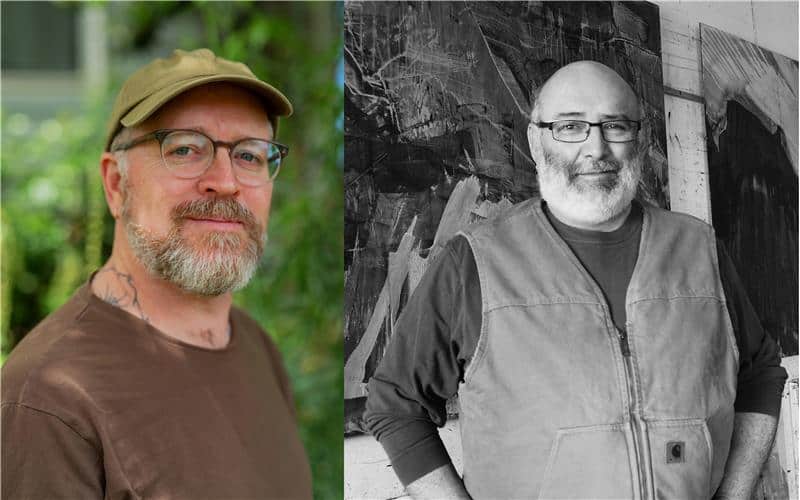
Left: Lettie Jane Rennekamp. Photo by Christopher Diego. Right: Mark Small. Photo courtesy of the artist.

Portland, OR —January 14, 2026. In collaboration with the Port of Portland, the Regional Arts & Culture Council (RACC) is excited to announce that Oregon artists Lettie Jane Rennekamp and Mark Small have each been chosen to create a mural design for the exit halls at the Portland International Airport (PDX), anticipated to be installed in spring 2026. The artists were selected through a competitive process by the PDX Terminal Core Redevelopment (TCORE) Public Art Committee that considered applications from an applicant pool of 78 artists and artist teams from across the region.

The renovation of the airport’s main terminal aims to increase the capacity, flexibility, and resilience of the airport, while improving the travel experience and adding more of what people love about PDX–including more art. These commissioned mural designs are among several exciting new public art projects RACC is managing within the new PDX.

The vibrant 59-foot-long murals will celebrate local mural culture and promote pride of place and a sense of home. Custom-printed and installed in the north and south exit halls of the main terminal, the artworks will remain on display for one to three years. The exit halls are the last post-security area passengers will walk through before they meet friends, family, or other meeters/greeters, leave the terminal, or travel downstairs to baggage claim to pick up their luggage. The murals will be the first cycle of two new rotating art exhibition locations post-security at PDX that will be refreshed with new murals every two to three years.

“We’re excited to collaborate with the Port of Portland on these new mural commissions by Lettie Jane Rennekamp and Mark Small,” says Kristin Law Calhoun, Director of Partnerships and Programs at the Regional Arts & Culture Council. “Located in the airport’s exit halls, these bold, site-responsive works will engage travelers as they arrive or depart, highlighting some of the distinct creative culture and landmarks of our region.”

“Talented local artists Lettie Jane Rennekamp and Mark Small are creating two massive inspiring murals for PDX, bringing their unique transformative designs to the airport’s new North and South passenger exit lanes. These fantastic and colorful mural designs represent Portland’s resilience and potential, celebrate our thriving community spirit, and welcome everyone,” says Wendy Given, Art Program Manager at the Port of Portland.

About the Artists

Lettie Jane Rennekamp (she/they) is an artist, muralist, teacher, and parent originally from Kentucky and now based in Portland, OR. Here, she also owns and runs Ulna Art Studio with Cole Lyons and Jolyn Fry. Through illustrations depicting people, plants, and patterns, Rennekamp aims to capture abstract ideas such as moving through grief, self-acceptance, or a sense of place. Her work ranges from more serious yet tender contemplative work about what it means to inhabit a body in this world to whimsical depictions of nature and the humans and animals that occupy it. Rennekamp has had murals commissioned by many clients in Portland and beyond, including Boeing, The City of Tigard, Advantis Credit Union, Leach Botanical Garden, Scratch Meats, and Radius Art Center, among others, and numerous private individuals.

Rennekamp’s mural, entitled Watercolor Walk, presents a dreamlike walk through a park, providing the diverse travelers to PDX an experience that is both joyful and soothing. As people pass by the mural, they will find themselves meandering through a visually rich landscape of watercolor washes and collaged elements.

Based in Portland with deep roots in Brooklyn, New York, Mark Small is a visual artist and graphic designer who creates distinctive visual narratives at the intersection of classical design principles and contemporary urban culture. His practice draws from mid-century modernist traditions and Renaissance compositional structures, interwoven with the visual language of hip-hop’s golden era and graffiti culture.

As co-founder and Chief Creative Officer of Les Sapeur, a design studio established in 2023, Small develops work that centers themes of place, identity, and collective experience. Through his practice, he advances representation and accessibility within the Pacific Northwest’s cultural and design sectors, contributing to the region’s evolving creative landscape and commitment to diverse artistic voices.

Small’s mural presents a panoramic view of Portland’s urban landscape, incorporating recognizable architectural landmarks, neighborhood scenes, and symbolic imagery—including a sneaker-wearing sasquatch integrated into the city’s streetscape. The composition is designed to align with the flow of passengers moving through the Exit Hall, creating visual rhythm that corresponds to pedestrian movement through the terminal.

The artwork offers moments of recognition for returning residents while introducing visitors to Portland’s cultural character and sense of place. Through its layered references to local landmarks and community identity, the mural reflects the city’s creative spirit and establishes the airport as a threshold between travel and homecoming.

Please find a folder of images for use here


About the Regional Arts & Culture Council (RACC): For decades, RACC has aimed to serve every neighborhood of our region to ensure that arts and culture are accessible to all. Our nationally acclaimed public art program enlivens parks, community centers, government buildings, libraries, and health clinics; brings people and communities together; and makes our region a more vibrant and welcoming place to be. As a 501(c)(3) nonprofit organization, we work to elevate the voices and visibility of individual artists, creative organizations, and arts nonprofits – especially those that serve underrepresented communities – amplifying their impact through grants, professional development, and other vital resources. Through strategic partnerships, our team works to build coalitions and lead new initiatives, crafting a shared vision for an equitable future for arts and culture in our region. For more information, please visit racc.org.

About Port of Portland: 

With three airports, three active marine terminals, and five business parks, the Port of Portland is an economic engine for transforming the region into a place where everyone is welcome, empowered, and connected to the opportunity to find a good job or grow their business. The Port works to pull down barriers and provide access to people and local businesses who have been left out of the region’s economic growth—including people of color, low-income workers, and people with disabilities. Collectively, the Port leads big projects in the region, including building a new PDX with a community-centered approach; transforming a former marine terminal into a site for innovation in the housing construction and mass timber industries; and providing more options for Pacific Northwest businesses to send their products around the world. For more information, visit www.PortofPortland.com.

Contact Information

Meech Boakye, Communications Lead, RACC, mboakye@racc.org

Port of Portland, media@portofportland.com


Northwest Library: A transformed space in Slabtown

Exterior of the new Northwest Library along Pettygrove St.; rendering courtesy of Hennebery Eddy Architects

Northwest Library has moved to a brand new location, going from a small, leased space at 2300 NW Thurman to 2030 NW Pettygrove Street. This new location is approximately 11,000 square feet, more than twice the size of the former library at 4,700 square feet.

Multnomah County Library is growing library spaces as part of a November 2020 capital bond. As part of this work, in 2021, the library purchased the new Northwest Library building, which sits on NW Overton Street to the south and on NW Pettygrove Street to the north. The library and its partners renovated and transformed this building into a brand new space for the community as part of the library’s goal to reduce costs and uncertainty related to leased spaces.

Northwest Library has long been a small but beloved location for Northwest Portland, and its expansion means more space for the community. That’s why insights from community members have guided the vision and purpose for the space, with the design team gathering feedback from senior citizens, families, teens, people experiencing homelessness and the neighborhood association. Gifts to The Library Foundation supported an interactive early learning space, a mobile creative learning lab, and a study space for teens at Northwest Library.

New features include:

  • A large early learning and play space for children and their families.
  • A teen area with space for technology, homework and creative expression.
  • A larger, more diverse collection of books.
  • Five small community rooms for study, homework and small group meetings; one medium and one large room for group meetings, library programs and presentations.
  • Updated wi-fi and technology, including more laptops, iPads and creative software for patron use.
  • New Automated Materials Handling system, ensuring materials get to patrons much faster.
  • Modern self checkout stations to provide a better patron experience.
  • New art that represents the community in partnership with the Regional Arts and Culture Council including:
    • A suspended artwork by artist Christine Clark
  • Artwork from the Portland Street Art Alliance including:
    • A room-spanning mural that covers the adult seating area, teen area and kids’ area by artist Kyler Martz
    • Mural in the gallery seating area by artist Nia Musiba

Centering the community 

Northwest Library has been a vital center of the community for decades. To amplify the community’s ideas, the library worked with the design team to table at existing community events and host focus groups, public meetings and public surveys. We engaged over 1,700 people during more than 19 activities. Community members cast 1,189 votes for Northwest’s color palette, with the winning theme being beautiful blues inspired by the Vaux’s Swift migration. The color palette reflects the sky and sunset as the birds would funnel into the chimney at Chapman Elementary School.

Project teams held paid affinity focus groups with neighborhood elders, families, teens and social service providers and clients. The local neighborhood association was also engaged in the design process.

Learning and playing in the kids area

Northwest Library is continuing the commitment to early learning and development with a 919 square foot kids area. This includes an interactive learning and play installation developed by the Burgeon Group, the premier firm designing, building, and installing creative early learning spaces in public libraries. With an engaging nest theme that evokes the Vaux’s Swift migration, kids can let their imagination soar. The updated kids area will also have technology and seating for youth and their caregivers to learn and play side-by-side.

A new teen area

Northwest Library’s new 275 square foot teen area is a special addition. Guided by teen input, teens will have access to an area where they can study, play games using state-of-the-art video equipment on a 75” screen and just be in community with other teens. Teens have an opportunity to plug-in (or unplug!) in a new area complete with artwork from artist Kyler Martz, which was inspired by an art workshop held with local teens. Participants shared a desire for artwork that is tranquil with a connection to nature.

Places for connection

With multiple community rooms available for patron use, people can connect much easier than before at Northwest Library. Going from one meeting room at the old location to seven new community rooms for a total of about 1,300 square feet after construction in the new building, the library is excited to expand these places for connection. Overall, the community rooms consist of one large, one medium and five small community rooms. Whether attending a library event, a community meeting, or just needing a quiet room for a one-on-one conversation, these spaces are for the public.

To increase connection, all community rooms in Northwest boast audio/visual-equipped spaces (A/V-equipped) to accommodate advanced meeting needs and collaboration. Need to connect remotely for a job interview or host a presentation? Northwest has you covered! All of the meeting rooms support state-of-the-art presentation and video conferencing when connected to a library-supplied laptop.

Additionally, these community rooms are even more accessible thanks to assistive listening systems (ALS) which amplify sounds from lectures, presentations, storytimes, and events, allowing hard-of-hearing patrons to fully engage with library programs and resources. Northwest offers assistive listening systems via two different methods: a wireless system that allows patrons to use library provided receivers or their own smartphones and a portable offering which includes a microphone for the speaker and a listening device for the audience.

Northwest is yet another library location to introduce Multnomah County’s new fiber network, providing increased internet speeds and bandwidth. The building boasts a strong wi-fi signal throughout.

Entryway and community room at the new Northwest Library; rendering courtesy of Hennebery Eddy Architects

Diversity in building

A wide range of tradespeople, experts and construction workers with diverse backgrounds built Northwest Library. Over the life of the project, 320 trades workers from the local area built this library with great pride.

  • Apprentice utilization: 21.4%
  • Apprentice-level woman: 38.9%
  • Apprentice-level minority: 64.8%
  • Journey-level minority: 35.4%
  • Journey-level woman:12.4%

Not only was there a diverse workforce building the new Northwest, the companies who employed these workers also represented a wide range of communities.

  • Women Business Enterprise (WBE): 21.3%
  • Veteran Business Enterprise (VBE): 6.7%
  • Minority-owned Business Enterprise (MBE): 1.5%
  • Emerging Small Business (ESB): 0.3%

Artwork for all

As part of these building projects, each major location gains engaging new artwork. One of these exciting art pieces is thanks to the Multnomah County Percent for Art Program which is led by the Regional Arts & Culture Council (RACC). RACC advocates for equity, inclusion and access within the arts and connects artists and creatives to opportunities throughout the region.

Portland-based sculptor and installation artist Christine Clark has created a multi-piece suspended artwork throughout the library’s clerestory area. Inspired by the rich history of Slabtown and the Vaux’s Swifts, Christine’s powder-coated and mild steel artwork celebrates the people, waterways, and traditions that shaped the neighborhood and the larger Northwest area. Her suspended basket-like forms honor the Native weaving traditions of creating and selling baskets. The green leaves that accompany the multiple elements of the artworks symbolize the crops that were grown by Chinese immigrants in the late 1800s, cultivating vegetables and other produce that were sold locally. The interwoven blue strands that sinew their way throughout the clerestory area and around the baskets evoke the creeks that once flowed throughout Slabtown as well as the flight patterns of the Vaux’s Swifts as they descend into Chapman School. Christine’s hope is that this suspended artwork will allow the library users to look up, reflect, and connect to the past while being present in many of the library’s gathering spaces.

Throughout the room-spanning Bound for Slabtown mural, which covers the adult seating area, teen area and kids area, artist Kyler Martz explores the transformative power of reading and nature through the migratory journey of the Vaux’s Swift. By observing the surreal transformation of trees into books, books into birds, the viewer is encouraged to reflect on their relationship with nature and the ability to grow and change.

In the gallery seating area, artist Nia Musiba created this mural, drawing inspiration from Oregon’s natural landscape and its vibrant flora and fauna. The piece takes a colorful, abstract approach to depicting elements of the natural world, abstracted views of irises, ferns, Oregon swallowtails, Vaux’s swifts, oxalis, and more. It serves as a reminder to enjoy the beauty and balance of the environments that surround us.

Reading gallery in the new Northwest Library; rendering courtesy of Hennebery Eddy Architects

A resilient building

Hennebery Eddy Architects led the design for Northwest. Howard S. Wright, A Balfour Beatty Company, is the General Contractor. Northwest Library is on track to be LEED Silver certified. Northwest reduced its impact on the environment by reusing much of the existing building structure and facades. The building also boasts a seismic upgrade, highly efficient new mechanical and plumbing systems, all LED lighting, as well as low-emitting materials which contribute to improved indoor air quality.

Multnomah County Library is excited to present this larger, transformed Northwest Library to the community.


RACC, City of Portland to Celebrate the Addition of 21 Artworks to Public Art Collection at October 2 Exhibition

Contact Information

Meech Boakye, Communications Lead, RACC, mboakye@racc.org


Portland, OR — September 18, 2025. The Regional Arts & Culture Council (RACC), in partnership with the City of Portland Office of Arts & Culture, is excited to announce an exhibition of 21 artworks newly acquired for the City’s Visual Chronicle of Portland collection. The exhibition will be hung in the City Gallery space on the second floor of the Portland Building. The public opening event is on Thursday, October 2, at 3pm, and all are welcome to attend.

The artists whose work was selected are Stephanie Buer, Jax Chow, John Cline, Paul Higgins, Hermon Joyner, Kendra Larson, Jim Lommasson, Ivan McClellan, Robert Minervini, David Rice, and Chris Russell.

“These 21 artworks speak to the rhythms and tensions of life in Portland, from the moments of joy and connection to the shifting relationships between people and place,” according to Kristin Law Calhoun, Director of Partnerships and Programs, Regional Arts & Culture Council. “They represent a wide range of voices and approaches that remind us of the depth of talent in our creative community, together they capture how artists make sense of our city.”

“The Portland Office of Arts & Culture is thrilled to present a new set works for the Visual Chronicle of Portland at the Portland Building,” said Eric Fredericksen, Public Art Administrator at the Office of Arts & Culture. “We look forward to further collaboration with the Regional Arts & Culture Council to create new opportunities for public engagement with this important project that collects artists’ responses to the city over the past 40 years.”

See images and key information about the selected artworks here.

About the Visual Chronicle of Portland

The Visual Chronicle of Portland is a City-owned collection of works on paper that offers a dynamic portrayal of artists’ views of the city’s social and urban landscapes. The intent of the collection is to capture “the spirit of the times” and artists’ sense of “Portlandness” as the city evolves and changes. It serves as both an eclectic view of life in Portland as well as a record of artists working in the city. The artworks in this acquisition were selected through a four-stage review process led by RACC and including the participation of an independent panel made up of artists, community members, and City employees.

The collection strives to reflect a diversity of populations, artistic disciplines, and points of view. Artists not yet represented in the collection were prioritized, to expand the range of expression and representation in the Visual Chronicle of Portland. The Visual Chronicle of Portland was started in 1985 following the suggestion of artist Henk Pender, whose hometown of Amsterdam has a similar collection. During its 40 years, this collection has grown to 463 works by 270 artists that are displayed in City-owned spaces throughout Portland.

About the Regional Arts & Culture Council

For decades, RACC has aimed to serve every neighborhood of our region to ensure that arts and culture are accessible to all. Our nationally acclaimed public art program enlivens parks, community centers, government buildings, libraries and health clinics; brings people and communities together; and makes our region a more vibrant and welcoming place to be. As a 501(c)(3) nonprofit organization, we work to elevate the voices and visibility of individual artists, creative organizations and arts nonprofits – especially those that serve underrepresented communities – amplifying their impact through grants, professional development and other vital resources. Through strategic partnerships, our team works to build coalitions and lead new initiatives, crafting a shared vision for an equitable future for arts and culture in our region. For more information, please visit racc.org.

About the Office of Arts & Culture

Established in July 2024, the City of Portland’s Office of Arts & Culture supports Portland’s arts and culture ecosystem and expands opportunities for Portlanders to participate in creative experiences. It does so through arts education coordination, cultural planning, grantmaking, public art and the Percent for Art program, and more. Arts & Culture’s vision is to put arts at the center of public life in Portland.

About the City Gallery at the Portland Building

Formerly known as the Installation Space, the City Gallery is an open exhibition space on the second floor of the Portland Building, freely accessible to the public. The Office of Arts & Culture has recently assumed responsibility for programming the space, and will focus on presentations from City collections, including the Visual Chronicle of Portland, while developing longer-range plans for the gallery.